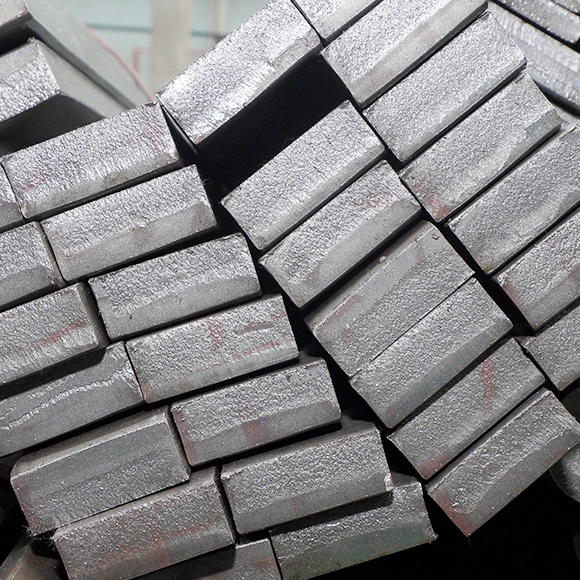
Bulk metal procurement carries incredibly high stakes. A single inconsistent batch can halt your production lines instantly. These hidden material flaws quickly erase your tight machining margins. Bridging the gap between strict engineering specifications and volatile supply chain realities is a constant challenge. Engineers demand exact tolerances for complex components. Supply chain directors need reliable deliveries to maintain production schedules. We designed this guide to align these competing priorities perfectly. You will learn a definitive framework for evaluating specialized suppliers. We will show you exactly how to standardize your Request for Quotes (RFQs) to eliminate costly miscommunications. You will also discover how to accurately calculate the overall profitability of your bulk raw materials without relying on surface-level price tags. Navigating these purchasing decisions effectively separates highly profitable operations from costly manufacturing downtime. This guide provides the practical strategies you need to secure high-quality raw materials.
Key Takeaways
Machining ROI: The premium paid for cold drawn steel is offset by reduced machining time, minimal tooling wear, and zero need for surface finishing.
Vendor Due Diligence: Partnering with a high-end steel profile manufacturer requires verifying Mill Test Reports (MTRs), traceability standards, and batch-to-batch consistency.
Risk Mitigation: Leveraging phased rollouts (First Article Inspection) minimizes the risk of bulk defects and misaligned tolerances.
Validating the Investment: Cold Drawn Steel vs. Alternatives in High-Volume Production
Purchasing stakeholders often question the premium price of precision materials. You must validate this engineering choice clearly before initiating bulk procurement. Contrast your options objectively. Hot rolled steel offers a low initial price point. However, it requires extensive secondary milling to achieve usable dimensions. Standard cold rolled steel provides a better surface finish. Yet, it often lacks the strict dimensional stability required for complex geometries. Cold Drawn Steel delivers entirely different mechanical properties. Manufacturers pull the metal through a hardened die at room temperature. This specific strain hardening process increases yield strength and tensile strength by 20% to 30%.
You can clearly see these differences when analyzing mechanical performance alongside production costs. The matrix below highlights why upfront material prices rarely tell the whole story.
Material Type
Yield Strength
Dimensional Tolerance
Machining Requirement
Hot Rolled Steel
Baseline
Loose / Inconsistent
High (Requires heavy milling)
Standard Cold Rolled
Moderate Improvement
Average
Moderate (Requires finishing)
Cold Drawn Profile
+20% to +30%
Extremely Tight
Minimal to Zero
The core justification lies in the machining ROI argument. High upfront raw material costs often look intimidating on a spreadsheet. However, exact dimensional tolerances eliminate numerous secondary machining operations. Superior surface finishes allow you to skip the grinding phase entirely. This drastically lowers your true cost per unit. Reduced labor hours and faster cycle times easily offset the initial premium. Furthermore, the improved machinability extends the life of your cutting tools. You replace fewer CNC inserts. You experience less machine downtime. Ultimately, investing in precision raw materials protects your overall production margins.
Formulating the RFQ: How to Specify Cold Drawn Steel for Bulk Orders
Writing a foolproof Request for Quote (RFQ) requires strict attention to detail. Zero ambiguity is your primary goal. Vague specifications lead to inconsistent batches. You must define every mechanical, chemical, and physical parameter clearly.
Mechanical and Chemical Grades
Always specify the exact industrial grade required for your application. Common grades serve very different operational purposes. Grade 1018 represents a low-carbon option. It offers excellent weldability and suits basic cold forming tasks. Grade 1045 provides medium carbon content. Engineers select 1045 when manufacturing high-strength shafts or durable gears. Grade 12L14 is a highly specialized free-machining grade. It contains lead additions to lubricate cutting tools. You should specify 12L14 for high-speed CNC fasteners and precision automotive parts. Detail these chemical compositions explicitly to avoid unauthorized material substitutions.
Dimensional Tolerances and Surface Finish
Never rely on standard mill tolerances for high-volume precision work. Highlight the necessity of explicitly stating your acceptable Outside Diameter (OD) and Inside Diameter (ID) tolerances. For example, specify a tolerance of +/- 0.002 inches if your application demands it. Straightness limits also matter deeply. Poor straightness causes violent vibrations inside automatic bar feeders. This ruins spindles and halts production. Finally, detail your exact micro-inch surface finish requirements. Requesting a specific Root Mean Square (RMS) value ensures the material meets your aesthetic or functional needs immediately upon delivery.
Compliance and Certification Standards
Regulatory compliance protects your product liability. Emphasize the strict requirement for ASTM A108 compliance. You might also specify equivalent regional standards depending on your end-user market. Mandatory Mill Test Reports (MTRs) are non-negotiable. MTRs provide documented chemical and physical verification for every single batch. They prove the metal matches your engineering blueprints. Instruct your vendors to attach these reports to every shipment. Do not accept deliveries lacking proper metallurgical documentation.
Evaluating a High-End Steel Profile Manufacturer
Securing a reliable supply chain demands rigorous vendor due diligence. You need a strict framework for shortlisting and auditing potential suppliers. A true high-end steel profile manufacturer operates much differently than a basic metal broker.
Assess their overall capacity and scalability first. High-tonnage orders strain weak supply chains. Determine if the manufacturer can handle bulk volume surges without extending your lead times. Ask about their mill relationships. Some vendors subcontract complex orders to unvetted third-party mills. This compromises quality control. Demand transparency regarding where they physically draw the steel.
Next, scrutinize their quality control infrastructure. The best manufacturers invest heavily in defect prevention. Look for the following critical capabilities during your audit:
ISO 9001 Certification: This proves they follow standardized quality management systems across all departments.
In-House NDT Capabilities: They should utilize non-destructive testing, such as eddy current or ultrasonic testing, to detect internal micro-cracks.
Automated Laser Micrometers: These devices provide continuous, real-time tolerance monitoring during the actual drawing process.
Metallurgical Laboratory: They should possess the internal tools to verify yield strength, tensile strength, and hardness on-site.
Finally, demand absolute traceability. Heat lot tracking remains paramount. A "heat" refers to a specific batch of molten steel. A premium manufacturer tracks this heat number from the raw wire rod all the way to the finished profile. If a field failure occurs, you must be able to trace the exact origin of the metal. Traceability prevents a single localized defect from causing a massive, costly product recall.
Implementation Realities and Supply Chain Risks
Theoretical procurement strategies often fail against supply chain realities. You must build trustworthiness into your purchasing model by addressing actual risks head-on. Acknowledging these pitfalls protects your budget and your production timeline.
Analyze the risk and reward of buying surplus metal. Surplus markets sometimes offer steep discounts on bulk tonnage. We strongly advise caution here. Surplus inventory often lacks original, reliable MTRs. You cannot guarantee the exact chemical composition. It poses a massive risk for high-stress applications or precision machining. Surplus steel is generally viable only for non-critical structural applications where exact tolerances matter less. For high-volume automated machining, stick to prime material directly from the manufacturer.
Packaging and transit risks represent another major vulnerability. Precision profiles are highly susceptible to surface corrosion. Transit damage also ruins tight tolerances. You must mandate strict packaging protocols in your RFQ. Follow these specific steps to protect your bulk freight:
Specify the application of high-grade protective oil coatings immediately after the drawing process.
Require Volatile Corrosion Inhibitor (VCI) packaging. VCI paper or plastic emits protective molecules that prevent rust during humid transits.
Demand secure wooden crating for all bulk freight. Loose bundling leads to surface gouges and bent profiles during truck loading.
Request customized bracing for overseas shipping containers to prevent load shifting in rough seas.
Lead time volatility also threatens industrial operations. Raw material shortages happen frequently in global markets. Navigate these constraints by establishing staggered delivery schedules. Do not demand an entire annual order in one shipment. Instead, utilize blanket purchase orders. A trusted vendor will hold your inventory and release it according to your monthly production schedule. This locks in your pricing while mitigating warehouse space constraints at your facility.
Shortlisting Logic and Next-Step Actions
Guiding your team toward a final vendor decision requires a structured evaluation process. Never transition 100% of your bulk volume to a new supplier immediately. This approach invites catastrophic production failures. Implement a strict pilot strategy instead.
Start with a First Article Inspection (FAI). Order a small pilot batch run first. Run these sample profiles through your actual CNC machines. Measure the tool wear. Verify the cycle times. Check the final dimensions against your engineering blueprints. Only after the pilot batch passes your internal quality control should you authorize the larger bulk order.
We recommend scoring your shortlisted suppliers using a standardized vendor scorecard. Assign specific weights to criteria that matter most to your production flow. Score them on MTR transparency. Did they provide legitimate test reports quickly? Evaluate their communication speed during the RFQ phase. Slow responses now mean disastrous delays during a crisis. Judge their exact tolerance capabilities based on the pilot run. Finally, calculate the total landed cost. Landed cost includes the raw material price, freight charges, customs duties, and packaging fees. Do not simply pick the lowest price per ton. Pick the supplier who scores highest across all operational metrics.
Conclusion
Successful bulk procurement relies on precise specification and aggressive supplier vetting. It goes far beyond simply finding the lowest price per ton. You must clearly justify the machining ROI to your stakeholders. You must formulate airtight RFQs that demand exact tolerances, specific chemical grades, and comprehensive MTR documentation. Furthermore, protecting your supply chain means verifying a manufacturer's capacity, demanding VCI packaging, and utilizing blanket purchase orders.
Take actionable steps today to secure your material pipeline. Do not let vague specifications erode your profit margins. Submit your engineering drawings or your current specifications to a qualified engineering team. Request an honest feasibility audit. Secure a custom bulk quote that factors in strict quality control and reliable delivery schedules. Protect your production lines by treating your steel procurement as a critical engineering function.
FAQ
Q: What is the standard minimum order quantity (MOQ) for custom cold drawn steel profiles?
A: Standard MOQs typically range from 3 to 5 metric tons for custom profiles. This volume justifies the dedicated setup time and custom tooling required for the die. Highly complex shapes may require larger minimums to absorb the initial engineering and die-cutting costs efficiently.
Q: How do I verify the quality of a bulk cold drawn steel shipment?
A: Always cross-reference the supplied Mill Test Reports (MTRs) with your original RFQ specifications. For maximum security, send a sample from the incoming batch to an independent metallurgical laboratory. Have them verify the chemical composition and perform a tensile pull test to confirm the data.
Q: Can a high-end steel profile manufacturer hold tolerances tighter than standard ASTM A108?
A: Yes, premium manufacturers can achieve ultra-tight custom tolerances well beyond basic ASTM A108 standards. However, requesting these extreme tolerances requires slower drawing speeds and more frequent die replacements. This will increase your bulk pricing and potentially extend lead times.
Q: Is it safe to buy surplus cold drawn steel in bulk?
A: Surplus steel is viable only for non-critical structural applications. It is highly risky for precision machining, aerospace, or automotive parts. Surplus inventory often lacks original heat traceability and reliable MTRs. Without documented chemical and physical verification, you risk catastrophic part failures under stress.