Modern commercial and industrial buildings must balance architectural ambition against strict load-bearing realities. Structural integrity relies entirely on materials capable of managing extreme compressive, shear, and bending forces. You simply cannot risk catastrophic failure in heavy-duty structural environments.
Hot Rolled Steel serves as the foundational material for most heavy construction projects worldwide. However, selecting the appropriate structural grade requires understanding specific mechanical behaviors under immense stress. Engineers must also account for distinct dimensional realities and environmental limitations during the project design phase.
This guide breaks down the underlying engineering mechanics of this crucial building material. We compare various structural profiles to help you optimize load distribution effectively. You will explore critical compliance and fire-safety considerations to mitigate risk. Finally, we provide a solid framework for evaluating supply partners to ensure your structural framework maintains consistent batch quality from start to finish.
Key Takeaways
Homogeneous Strength: The high-temperature rolling process (1100°C–1250°C) refines grain structure, delivering a combination of high yield strength and micro-flexibility that prevents brittle fracturing under heavy loads.
Profile Specificity: Different structural forces require distinct profiles, from I-beams for span support to Hot Rolled Square Steel for vertical compression.
Material Limitations: Hot rolled steel is not a universal solution; it requires specific fireproofing mitigation (ASTM E119) and has wider dimensional tolerances compared to cold-rolled alternatives.
Targeted Application: It is strictly utilized for structural frameworks (bending and compression) rather than concrete reinforcement (tension), demanding a high-end steel profiles manufacturer for consistent batch quality.
The Engineering Foundation: Why Hot Rolling Drives Structural Resilience
The Recrystallization Mechanism
Steel undergoes a fundamental physical transformation when exposed to extreme heat. Manufacturers heat the raw steel billets above their recrystallization temperature, typically between 1100°C and 1250°C. Reaching this thermal threshold allows the metal to become highly malleable. Industrial rollers can then shape the glowing steel into massive structural components. Because this shaping occurs above the recrystallization point, the steel forms new, defect-free grains. It maintains complete structural integrity throughout the severe deformation process.
Grain Structure and Micro-Flexibility
The subsequent cooling phase plays an equally critical role in material performance. As the shaped steel cools at room temperature, its internal grain structure normalizes. This natural cooling creates a highly homogeneous material. Homogeneity eliminates internal weak points. As a result, the final product easily absorbs high-impact pressure. It readily handles dynamic loads, such as continuous industrial vibrations from heavy machinery or intense high-wind shear forces.
More importantly, this normalized grain structure introduces a crucial degree of micro-flexibility. Real-world structures shift slightly under environmental stress. Micro-flexibility ensures the framework will bend slightly rather than experiencing a sudden, catastrophic brittle fracture.
Yield Strength vs. Tensile Strength
Engineers evaluate structural metals using two primary metrics: yield strength and tensile strength. Yield strength defines the maximum stress a material can endure before permanently deforming. Tensile strength measures the ultimate breaking point. For primary building frames, bridges, and massive industrial warehouse spans, yield strength remains the dominant concern.
Structural sections must carry massive sustained loads without sagging. Hot rolled components deliver exceptional yield strength ratios. This specific metric makes them the primary choice for creating massive open spaces, often achieving 20 to 40-meter unsupported structural spans.
Core Structural Profiles and Load-Bearing Applications
Different vectors of physical force require specifically engineered cross-sections. Using the wrong profile in a load-bearing scenario introduces severe structural risk.
I-Beams and H-Beams
I-beams and H-beams represent the backbone of horizontal span support. We can break down their structural logic into two distinct parts: the flanges and the web. The wide horizontal flanges act to resist bending moments caused by downward gravity. Meanwhile, the solid vertical web provides the core shear strength required to distribute those heavy vertical loads uniformly across the supporting columns. This geometry minimizes overall material weight while maximizing span capacity.
Hot Rolled Square Steel
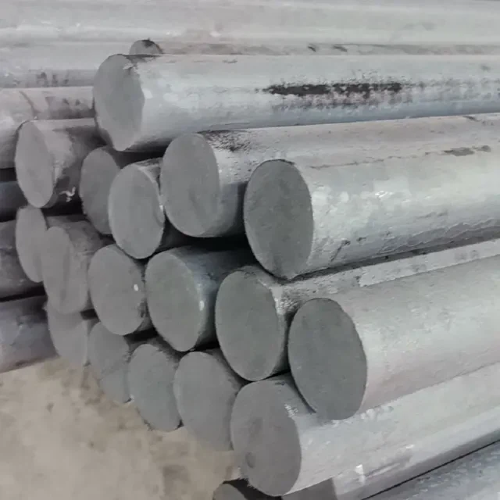
Vertical columns and heavy equipment frameworks rely heavily on Hot Rolled Square Steel. The symmetrical cross-section of a square profile delivers identical load-bearing capacity along both primary axes. This symmetry provides extraordinary uniform strength against torsional twisting forces. When industrial buildings require robust cross-bracing to prevent lateral sway during seismic events, engineers consistently specify square profiles to lock the structure into place.
Hot Rolled Round Steel
While square sections handle straightforward compression, Hot Rolled Round Steel excels in environments featuring multidirectional lateral forces. Engineers utilize massive round profiles for heavy-duty axles, structural pins, and deep foundation supports. A circular cross-section inherently lacks weak corners. It disperses incoming stress evenly around its entire circumference, making it ideal for specialized load-bearing columns facing variable wind or water currents.
Structural Pipes and Tubular Sections
Hollow structural sections, or pipes, deliver incredibly high strength-to-weight ratios. They provide immense rigidity while using significantly less raw material than solid bars. Modern construction projects utilize tubular sections for exposed architectural framing and roof trusses. As an added engineering benefit, the hollow interior easily accommodates internal mechanicals, routing electrical conduit or plumbing safely out of sight.
Profile Application Chart
Structural Profile | Primary Force Resisted | Typical Application |
I-Beams / H-Beams | Bending Moments & Vertical Shear | Floor joists, bridge spans, massive roof trusses |
Square Sections | Vertical Compression & Torsion | Primary columns, heavy equipment frames, cross-bracing |
Round Sections | Multidirectional Lateral Force | Foundation supports, structural pins, heavy-duty axles |
Tubular Pipes | Complex Bending (High Strength-to-Weight) | Exposed architectural framing, space frames |
Objective Material Evaluation: Where Hot Rolled Steel Fits (and Where it Doesn't)
Procurement errors often occur when project teams misunderstand the specific engineering limits of different metal classes. We must establish clear boundaries for material applications.
Hot Rolled vs. TMT Steel Bars
We must clarify the distinct engineering roles separating these materials to prevent dangerous procurement overlap. TMT (Thermo Mechanically Treated) bars undergo a specialized quenching process. They are strictly designed to resist tensile forces within poured concrete slabs. Concrete handles compression well but fails under tension. TMT bars solve this exact problem. Conversely, hot rolled sections stand alone. They are engineered to bear direct bending, compression, and shear forces in exposed or primary frameworks. You cannot substitute one for the other.
Hot Rolled vs. Cold Formed Steel (CFS)
The construction industry has seen a massive shift toward Cold Formed Steel (CFS). Developers favor CFS for lightweight, rapid-assembly, zero-weld modular buildings. However, CFS has strict physical limits. You must position traditional hot rolled materials as the non-negotiable requirement for heavy-duty, multi-story, or high-load industrial environments. CFS simply lacks the necessary structural mass and compressive resilience to support multi-ton overhead cranes or heavy manufacturing equipment.
The Dimensional Tolerance Trade-off
We must transparently discuss surface realities. Hot rolling occurs at extreme temperatures. As the metal cools naturally in open air, two things happen. First, the surface reacts with oxygen to form a rough, flaky layer known as "mill scale." Second, the material shrinks slightly, making precise millimeter-level dimensional predictions difficult.
Common Mistake: Specifying this material for tight-tolerance exposed architectural finishes without planning for secondary machining.
Set clear expectations. This material is perfectly suited for rugged structural framing hidden behind drywall or covered in industrial paint. If your project demands aesthetically flawless, precisely measured exposed metalwork, cold-rolled steel remains the superior choice.
Material Comparison Summary
Material Type | Primary Function | Structural Strengths | Known Limitations |
Hot Rolled Sections | Primary Load-Bearing Frameworks | Massive compressive strength, micro-flexibility | Mill scale surface, looser dimensional tolerances |
TMT Bars | Concrete Reinforcement | High tensile resistance, bonds well to concrete | Useless for exposed structural spanning |
Cold Formed Steel (CFS) | Lightweight Framing | Exact dimensions, rapid bolt-assembly | Lacks mass for heavy-duty industrial loads |
Risk Mitigation: Temperature Thresholds and Compliance Standards
The Thermal Vulnerability of Steel
Despite its immense strength, steel possesses a critical thermal vulnerability. We must look at the evidence-oriented data regarding heat impact. Structural steel begins losing its engineered strength at approximately 400°F (204°C). The situation degrades rapidly as temperatures climb during a building fire. At 1,100°F (593°C), the framework can lose up to 50% of its load-bearing capacity. Under normal loads, this sudden loss of structural integrity creates an immediate, critical collapse risk.
Fireproofing Engineering Strategies
Modern building codes mandate strict mitigation requirements to maintain structural integrity during a fire event. Safety engineers employ several distinct strategies to isolate the metal framework from extreme heat:
Intumescent Coatings: Contractors apply specialized paint directly to the metal. When exposed to extreme heat, this coating expands aggressively. It transforms into a thick, carbon-based thermal foam barrier, insulating the core material.
Cementitious Sprays: Industrial projects frequently use heavy, plaster-like cement mixtures sprayed directly onto the beams. This provides a robust, highly effective thermal shield.
Mineral Wool Wraps: For concealed areas, installation teams wrap columns in dense mineral wool blankets, physically blocking heat transfer.
Industry Testing Standards
Safety engineers and architects must verify material compliance through rigorous testing frameworks. You cannot rely on assumptions when lives are at stake. Evaluate materials against load-bearing capacity tests conducted under active fire simulation. The primary gold standards include ASTM E119, UL 263, and ISO 834. These testing protocols confirm exactly how long a specific beam can support its designed load while engulfed in flames, ensuring adequate evacuation time for building occupants.
Procurement Logic: Selecting a High-End Steel Profiles Manufacturer
Batch Consistency and Traceability
Large-scale structural integrity relies entirely on metallurgical consistency across multiple material heats. A single weak batch can compromise an entire building tier. A reliable high-end steel profiles manufacrurer must provide comprehensive Mill Test Reports (MTRs) for every delivery. These documents validate the exact chemical composition of the alloy. They also prove the material meets strict yield thresholds. Traceability ensures engineers can trace any individual beam back to its original factory furnace.
Customization and Scale Capacity
Industrial construction rarely relies on off-the-shelf solutions. Complex facilities demand precise structural engineering specifications. You must evaluate a manufacturing partner based on their physical scale capacity. Can they produce diverse, heavily customized profiles? Do they possess the logistical infrastructure necessary to handle massive structural deliveries on a strict project timeline? A capable partner prevents severe bottleneck delays during the erection phase.
Pre-Fabrication and Treatment Capabilities
Finally, evaluate suppliers based on their value-add secondary services. Raw steel requires significant preparation before installation. Look for a facility offering precision cutting and pre-drilling for bolt assemblies. Moving these processes into a controlled factory environment dramatically accelerates on-site assembly. Furthermore, assess their surface treatment options. For projects situated in harsh, corrosive environments, the supplier must offer professional galvanization services to manage oxidation and protect the underlying framework.
Conclusion
Structural integrity is an outcome of matching the right material physics to specific building demands. Hot rolled steel remains the undisputed champion for high-stress, heavy-load frameworks. Its unique combination of homogeneous yield strength and micro-flexibility prevents catastrophic brittle fractures under immense pressure.
To move forward successfully, structural engineers, architects, and procurement teams must take deliberate action. First, align all load calculations with the specific profiles best suited for those forces. Next, factor dimensional tolerances and fireproofing strategies into the earliest design phases. Finally, initiate rigorous supplier evaluations. Demand compliance, demand consistency, and insist on absolute testing transparency to guarantee the long-term safety of your structural assets.
FAQ
Q: Can hot rolled steel be used in extreme cold environments?
A: Yes, but you must specify precise low-temperature steel grades. Standard carbon steel can become brittle in sub-zero conditions. Engineers require materials tested for low-temperature impact toughness, usually verified via Charpy V-Notch testing, to ensure the framework will not fracture during deep freezes.
Q: How does mill scale affect the welding of hot rolled structural joints?
A: Mill scale creates a barrier containing trapped oxygen and impurities. If left intact, it causes dangerous porosity and weak inclusions within the weld pool. Welders must grind or blast the joint areas down to bare, shiny metal before structural welding to ensure a fully integrated bond.
Q: What is the maximum unsupported span achievable with hot rolled structural steel?
A: In typical industrial sheds and commercial warehouses, hot rolled structural frameworks realistically achieve 20 to 40-meter unsupported spans. The exact distance depends entirely on the engineered depth of the I-beams and the total anticipated roof load.


