Heavy machinery, massive construction frameworks, and complex automotive chassis all share one common foundation. They rely heavily on structural integrity to perform safely. You need materials built to withstand incredible stress and harsh environments. The reliability of these demanding applications hinges strictly on the physical properties of hot-rolled materials. But manufacturing these robust materials involves much more than a simple mechanical sequence. It requires a heavily regulated thermal and physical transformation. This careful manipulation dictates the final yield strength, flexibility, and dimensional tolerances of the metal. We want to provide procurement and engineering teams a transparent look into these complex production phases. You will discover practical defect mitigation strategies and essential evaluation criteria. By the end of this guide, you will know exactly how to select reliable suppliers for your next industrial project.
Key Takeaways
Hot rolling occurs above the metal’s recrystallization temperature (typically >1,700°F / 926°C), allowing for significant structural reshaping without fracturing.
The manufacturing sequence relies on precise thermal control, from initial reheating and primary descaling to controlled cooling, to maintain an equiaxed microstructure.
Unavoidable byproducts, such as iron oxide (scale) and internal stresses from cooling, require stringent quality control, pickling, and leveling processes.
Selecting a capable supplier requires auditing their Non-Destructive Testing (NDT) capabilities and tolerance management, especially for specialized structural profiles.
The Core Metallurgy: Why Temperature and Recrystallization Matter
To understand industrial metalworking, you must first understand the thermal threshold. Manufacturers process Hot Rolled Steel well above its recrystallization temperature. This critical phase initiates around 1,100°C and finishes no lower than 900°C. Pushing the metal past this extreme thermal boundary fundamentally alters its internal physical state.
Crossing this thermal threshold prevents a phenomenon known as work hardening. When you bend or compress cold metal, its internal grain structure elongates and becomes brittle. Heat eliminates this risk. The extreme temperature ensures the material forms an equiaxed microstructure. New, undeformed grains replace the old, stressed ones. This specific microstructural alignment retains critical ductility and toughness. Downstream industrial applications, ranging from pipeline construction to shipbuilding, demand these exact physical traits to prevent catastrophic structural failures under load.
Beyond structural integrity, we must also consider the underlying cost-efficiency logic. Heated steel is highly malleable. It requires significantly less mechanical force to shape and compress. Heavy industrial presses consume less energy when forming hot metal compared to cold metal. This energetic efficiency makes hot rolling significantly more cost-effective for large-volume production than cold rolling. You get a tough, durable material produced at a scale capable of supporting global infrastructure needs.
The 5-Step Hot Rolling Manufacturing Process
The journey from raw metal to a finished industrial component requires strict adherence to a multi-stage process. Each phase builds upon the last, applying immense heat and pressure to achieve the desired physical outcome.
Phase 1: Billet and Slab Reheating. The process begins when raw semi-finished materials enter a massive reheat furnace. These slabs, blooms, or billets reach extreme temperatures exceeding 2,200°F (1,204°C). This intense heat ensures uniform plasticity throughout the entire block, preparing the core for deep structural deformation.
Phase 2: Primary Descaling. As the glowing metal exits the furnace, ambient oxygen exposure immediately creates a thick iron oxide layer on its surface. High-pressure water jets, often operating at 220 Bar, shear off this primary scale. This violent cleaning prevents the brittle oxide layer from being pressed into the underlying metal during shaping.
Phase 3: Multi-Pass Rolling (Draught Reduction). The clean, glowing material passes through a series of rotating roll stands. Engineers measure the reduction in thickness as "draught." Massive friction and compressive forces squeeze the metal, elongating it rapidly. Each successive pass reduces the draught further, forcing the material closer to its final target dimensions.
Phase 4: Laminar and Controlled Cooling. Upon exiting the final roll stand, the steel undergoes highly specific cooling protocols. Facilities typically use laminar water cooling or natural air cooling depending on the exact grade required. The cooling rate strictly dictates the final microstructural stability. It also manages internal stress distribution, which prevents the metal from warping unpredictably later on.
Phase 5: Coiling, Cutting, and Finishing. The newly elongated steel reaches the end of the line. Manufacturers either tightly wind it into Hot Rolled Coils (HRC) for logistical efficiency, or they cut it to length. Cut-to-length processes yield heavy plates and structural bars ready for immediate fabrication.
Process Summary Chart
Manufacturing Phase | Key Action | Primary Technical Outcome |
1. Reheating | Furnace heating to >2,200°F | Achieves uniform plasticity across the entire slab. |
2. Primary Descaling | 220 Bar high-pressure water jets | Removes surface iron oxide to prevent rolled-in scale. |
3. Multi-Pass Rolling | Progressive draught reduction | Elongates and shapes the metal via massive compressive force. |
4. Controlled Cooling | Laminar water or ambient air exposure | Stabilizes microstructure and manages internal stresses. |
5. Coiling / Cutting | Winding into HRC or cutting to length | Prepares the material for logistical transport and fabrication. |
Transforming Billets into Specific Industrial Profiles
Manufacturers do not produce a single, universal shape. Different industrial sectors demand highly specialized profiles. By altering the final roll stands, mills can manipulate the malleable steel into various geometries.
Flat Rolled Products
Flat rolled processing focuses on reducing thickness while expanding width. The most common outputs include HRC, thin sheets, and thick plates ranging from 4mm to 350mm in thickness. Heavy industries rely heavily on these flat profiles. You will find thick plates forming the hulls of massive transport ships, the structural walls of cross-country pipelines, and the load-bearing chassis of heavy earth-moving equipment. Their continuous, unbroken surface areas make them ideal for large-scale welding and fabrication.
Shape Rolling (Structural Profiles)
Unlike flat rolling, shape rolling uses specific grooved rolls to manufacture precise dimensional profiles. As the billet passes through these custom grooves, it takes on complex cross-sections.
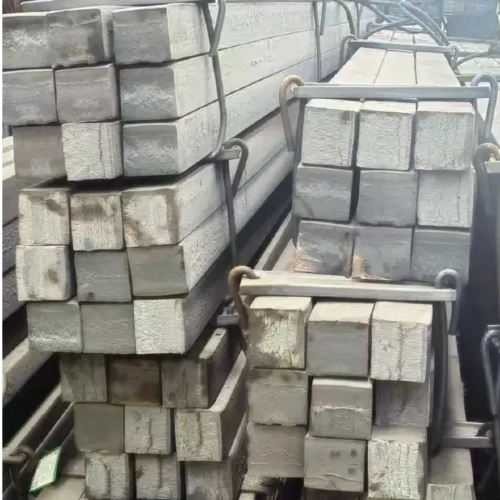
Hot Rolled Square Steel: This solid, four-sided profile serves as a fundamental building block in heavy industry. Engineers rely on its necessity in structural supports and general fabrication. Because of its dense, uniform geometry, it also serves as an excellent precursor raw material for downstream cold-drawn processing.
Hot Rolled Round Steel: Cylindrical profiles undergo similar shaping but emerge as long, solid rods. You will see detailed use in axles, heavy-duty industrial fasteners, and large construction dowels. These applications require high tensile strength combined with sufficient malleability to absorb sudden mechanical shocks without snapping.
Quality Control: Mitigating Common Hot Rolling Defects
We must maintain skeptical-friendly transparency regarding industrial manufacturing. Hot rolling naturally introduces surface and dimensional variances. Because the metal shrinks as it cools from extreme temperatures, exact precision remains elusive. The industry accepts typical dimensional tolerances of 2% to 5%. However, top-tier mills actively employ rigorous strategies to mitigate severe defects and ensure structural reliability.
Surface Defect Remediation
Surface imperfections happen frequently due to extreme heat and oxygen exposure. Rolled-in scale and slivers represent the most common issues. When primary descaling fails to catch every piece of oxide, the rollers press the brittle scale directly into the metal. To fix this, premium facilities utilize pickling. This acid wash chemically dissolves the secondary iron oxide. Following the acid bath, abrasive grinding techniques smooth out deeper slivers. This remediation process drastically improves the final corrosion resistance of the material.
Flatness and Shape Management
Uneven cooling rates across a large sheet or bar often induce thermal warping. Flatness distortions fall into specific technical categories. Symmetrical edge waves occur when the edges cool and shrink faster than the center. Center buckles happen under the opposite conditions. Quarter buckles appear midway between the center and the edge.
Top-tier manufacturers never ship warped materials. They detail the use of in-line straighteners and levelers. These massive machines apply reverse bending forces to the cooled steel, correcting thermal warping before final dispatch. This guarantees the material will lay flat and fit correctly during your fabrication process.
Sourcing Criteria: Evaluating a High-End Steel Profiles Manufacturer
Procuring reliable industrial materials requires strict supplier evaluation. You cannot base your purchasing decisions entirely on raw tonnage pricing. You must verify testing protocols and advanced processing capabilities.
A reliable high-end steel profiles manufacrurer must provide transparent material test reports (MTRs) for every batch. These documents prove the chemical composition matches your required specifications. Furthermore, look for suppliers utilizing in-line Non-Destructive Testing (NDT). Techniques like ultrasonic testing or magnetic particle inspection detect hidden internal micro-fissures. Finding these deep cracks before the metal reaches your facility prevents catastrophic project failures.
You should also look for advanced processing capabilities. Industry-leading suppliers offer "controlled rolling," also known as thermo-mechanical processing. This advanced technique refines the grain structure and improves overall toughness during the rolling phase itself, completely removing the need for expensive secondary heat treatments.
When applying shortlisting logic, advise your procurement buyers to audit a supplier holistically. Check their primary descaling pressure standards. Verify their cooling consistency protocols. Ask about their post-roll finishing options, such as providing Pickled and Oiled (P&O) surfaces. A supplier mastering these precise variables will consistently deliver superior materials.
Conclusion
The true value of hot-rolled materials lies far beyond their basic shape. Their strength comes from the precise management of extreme heat, intense mechanical pressure, and strictly controlled cooling phases. Understanding this thermal transformation helps you anticipate how the metal will behave under heavy industrial stress.
Recognize the 2-5% dimensional tolerance reality and plan your downstream machining accordingly.
Prioritize suppliers utilizing high-pressure descaling and in-line leveling to minimize surface defects and thermal warping.
Insist on comprehensive Material Test Reports (MTRs) to verify chemical composition and yield strength.
Audit potential partners for advanced Non-Destructive Testing (NDT) capabilities to eliminate the risk of internal micro-fissures.
Take immediate action on your next procurement cycle. Encourage your sourcing teams to request specific tolerance capabilities and full NDT documentation during the initial RFQ process. Setting these stringent requirements early guarantees you receive materials capable of supporting your most demanding applications.
FAQ
Q: What is the difference between Hot Rolled Coil (HRC) and Hot Rolled Bars?
A: The primary difference lies in the initial semi-finished material and the final roll forming equipment used. HRC originates from wide, flat steel slabs. Rollers press these slabs into long, thin sheets before tightly winding them. Conversely, hot rolled bars originate from thick, square billets. Specialized grooved rollers compress these billets into solid, specific shapes like rounds, squares, or flats.
Q: Why does hot-rolled steel have a rough, blue-grey surface?
A: This rough, blue-grey texture is called scale. It forms naturally when the hot metal cools in ambient air. The extreme heat causes the iron on the surface to react rapidly with oxygen, creating a tough layer of iron oxide. Manufacturers often leave this scale intact for heavy structural applications, or remove it via acid pickling.
Q: Can hot-rolled steel be used for precision components?
A: Generally, no. Hot rolling involves a natural 2-5% dimensional tolerance reality because the metal shrinks unpredictably as it cools. We highly recommend it for robust structural use where minor deviations do not impact safety. If you need tight tolerances for precision components, the material requires downstream machining or secondary cold rolling.
Q: Does the cooling process affect the steel's strength?
A: Yes, significantly. If the metal cools unevenly, it develops severe internal stresses. These stresses cause warping and compromise the material's structural integrity. Controlled laminar water cooling or regulated air cooling manages this thermal drop. This controlled phase is a critical quality step that ensures a stable, strong microstructure.


