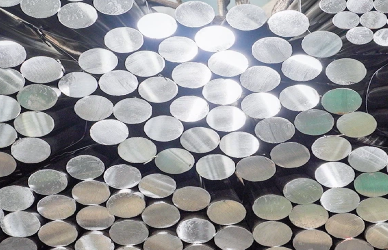
Cold drawn round steel is a high-performance material produced through a manufacturing process where steel billets are drawn through a die at room temperature to reduce their diameter and increase their length. This cold drawing process significantly enhances the material's properties, including its strength, hardness, and dimensional accuracy. Unlike other steel production methods, such as hot rolling, cold drawing is performed at lower temperatures, which results in improved mechanical properties and a smoother surface finish. Cold drawn round steel is commonly used in industries that require high-strength, precise components, such as automotive, aerospace, machinery manufacturing, and construction. This article will explore the step-by-step process of manufacturing cold drawn round steel, highlighting how the process contributes to its superior properties and its wide range of applications in various industries.
The Cold Drawing Process
Step 1: Preparation of Steel Billets
The cold drawing process begins with the preparation of raw steel billets, which are initially heated to a temperature that makes them workable, but not to the high temperatures used in hot rolling. After heating, the billets are carefully cut into manageable sizes to fit the machinery and die that will be used in the cold drawing process. Proper preparation is crucial to ensure that the billets can be processed efficiently, as it helps minimize material waste and ensures smooth processing through the next stages of drawing.
Step 2: Cold Drawing
Once the billets are prepared, they are pulled through a die at room temperature, which reduces the diameter and elongates the material. During this step, the steel undergoes significant deformation as it is drawn through the die, which refines its internal structure. The process not only changes the dimensions of the material but also enhances its overall dimensional accuracy, resulting in a more uniform product. The drawing process improves the steel’s mechanical properties, making it more suited for applications that demand precision and strength.
Step 3: Work Hardening
As the steel passes through the die, it experiences plastic deformation, a process in which the steel’s grain structure is rearranged. This leads to the introduction of dislocations in the material, which strengthens the steel by hindering the movement of dislocations within the crystal structure. This work hardening process significantly increases the material’s strength and hardness, making it more durable and resistant to stress, wear, and fatigue. The enhanced strength achieved through work hardening is one of the key benefits of cold drawing, as it enables the steel to perform better under heavy loads and harsh conditions.
Step 4: Surface Finishing
After the cold drawing process is complete, the steel undergoes surface finishing to remove any imperfections that may have resulted from the drawing process. The steel’s surface is polished, smoothing out rough spots and ensuring a more uniform and aesthetically pleasing finish. This step is crucial not only for improving the appearance of the steel but also for enhancing its resistance to corrosion and wear. A smooth surface minimizes the chances of corrosion-causing agents accumulating on the steel, improving its durability and extending its lifespan, especially in environments where it is exposed to moisture or chemicals.
Key Stages in Cold Drawing
1.Lubrication
Lubrication plays a critical role in the cold drawing process by reducing friction between the steel and the die. This is important for several reasons: it prevents overheating, reduces wear on the machinery, and ensures that the steel flows smoothly through the die. Proper lubrication also minimizes the risk of damaging the material during the drawing process, ensuring a high-quality finish and improving the overall efficiency of the process.
2.Multiple Passes Through Dies
Cold drawn round steel is processed in multiple stages, with the steel being pulled through a series of progressively smaller dies. Each pass through the die reduces the diameter of the steel and elongates it, gradually refining its properties. With each stage, the material’s strength, hardness, and precision improve, while its dimensions become more accurate. This step-by-step reduction ensures that the final product meets the desired specifications and exhibits consistent mechanical properties.
3.Final Sizing and Cutting
Once the desired dimensions are achieved, the cold drawn round steel undergoes final sizing to ensure it meets the required tolerances. After sizing, the steel is cut to the specified lengths for delivery or further processing. This final step ensures that the material is ready for its intended application, whether in manufacturing, construction, or other industries, providing a precise, high-performance component.
Key Properties Achieved Through Cold Drawing
1.Increased Tensile Strength
Cold drawing significantly enhances the tensile strength of steel by inducing plastic deformation. As the steel is pulled through the die, the grain structure is aligned, and internal dislocations are introduced, making it stronger and more resistant to deformation under heavy loads. This increased tensile strength enables cold drawn round steel to withstand higher levels of stress, making it ideal for applications such as automotive components, structural supports, and machinery parts that are subjected to heavy mechanical forces.
2.Dimensional Precision
One of the key benefits of cold drawing is the exceptional dimensional precision it achieves. During the cold drawing process, tight control is maintained over the steel’s diameter, roundness, and length. This results in round steel with exact dimensions that meet strict specifications, reducing the need for further machining and ensuring parts fit perfectly in their intended applications. The accuracy achieved in cold drawn round steel makes it highly suitable for industries that demand high tolerance, such as aerospace, automotive, and machinery manufacturing.
3.Improved Surface Finish
Cold drawn round steel has a significantly smoother and more polished surface compared to other forms of steel. The cold drawing process reduces surface imperfections such as scale, pits, and roughness, creating a uniform and polished finish. This smoother surface not only enhances the aesthetic appeal of the material but also improves its resistance to corrosion and wear. As a result, cold drawn round steel is more durable and longer-lasting, making it an ideal choice for components exposed to harsh environmental conditions or frequent handling.
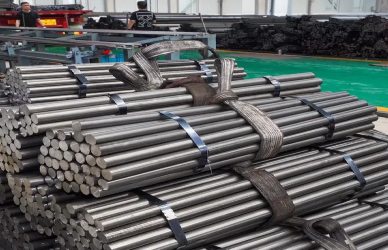
Applications of Cold Drawn Round Steel
1.Automotive Components
Cold drawn round steel is widely used in the automotive industry for critical components such as axles, suspension parts, and fasteners. The material’s high strength and wear resistance make it ideal for automotive parts that must endure heavy mechanical stress and harsh driving conditions. Cold drawn round steel ensures durability, precision, and reliable performance, making it essential for automotive systems that require long-lasting, high-performance components.
2.Machinery Parts
In machinery manufacturing, cold drawn round steel is used to produce essential parts like shafts, rods, gears, and bearings. These components play a crucial role in the functioning of industrial machinery, where precision, durability, and strength are required to ensure optimal performance. Cold drawn round steel’s superior fatigue resistance and dimensional accuracy make it perfect for high-performance machinery parts that need to withstand continuous operation and mechanical stress.
3.Construction
Cold drawn round steel is also utilized in the construction industry for structural components such as rods, bars, and frames. Its high strength and resistance to corrosion make it ideal for reinforcement in concrete structures and other critical support systems. Cold drawn round steel’s precise dimensions and durability contribute to the stability and longevity of buildings, bridges, and other infrastructure, ensuring that construction materials perform reliably under heavy loads and environmental challenges.
4.Aerospace
In aerospace manufacturing, cold drawn round steel is used for critical components such as landing gear, structural rods, and fasteners. The aerospace industry requires materials that offer both strength and lightness, and cold drawn round steel’s excellent strength-to-weight ratio, combined with its precise dimensions, makes it an ideal choice for aerospace components. These parts must withstand extreme mechanical forces and environmental conditions, and cold drawn round steel provides the necessary durability and reliability for safe and efficient aerospace applications.
Frequently Asked Questions (FAQ)
1. What makes cold drawn round steel different from hot rolled steel?
Cold drawn round steel undergoes plastic deformation at room temperature, resulting in higher strength, precision, and a smoother surface finish compared to hot rolled steel, which is processed at higher temperatures and lacks the same level of accuracy.
2. How does the cold drawing process improve the steel's strength?
The cold drawing process improves the steel's strength by inducing work hardening, which increases the material's resistance to deformation and enhances its tensile strength.
3. Is cold drawn round steel suitable for all types of manufacturing applications?
Cold drawn round steel is ideal for applications that require high strength, dimensional accuracy, and a smooth surface finish. However, it may not be suitable for applications where higher levels of flexibility or heat treatment are required.
4. How does lubrication affect the cold drawing process?
Lubrication reduces friction between the steel and the die, preventing damage to the material and ensuring smoother drawing, which helps maintain the precision and surface quality of the steel.
Conclusion
In conclusion, the cold drawing process is essential for improving the mechanical properties of steel, making it highly suitable for applications that demand exceptional strength, precision, and durability. Through the careful preparation of steel billets, drawing them through a die, inducing work hardening, and applying surface finishing, the process refines the material’s internal structure, enhancing its strength and ensuring tight dimensional accuracy. Cold drawn steel exhibits superior resistance to wear, fatigue, and stress, which makes it a preferred choice in industries like automotive, machinery, aerospace, and construction. Additionally, its smooth surface finish not only enhances its appearance but also improves corrosion resistance, extending its lifespan. Ultimately, the cold drawing process is crucial for producing high-performance steel components that fulfill the stringent requirements of modern industrial applications.


