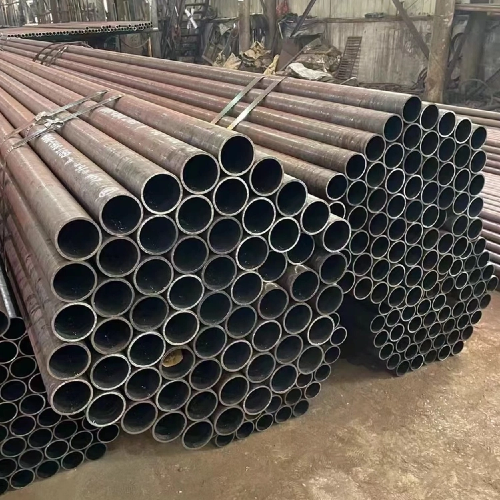
Pipe steel plays an essential role in the construction industry. From structural support to fluid transport, its versatility, durability, and cost-effectiveness make it a go-to material for large-scale construction projects. In this article, we will dive deep into the properties, types, advantages, and uses of pipe steel, highlighting why it is an indispensable material for modern construction projects.
What is Pipe Steel?
Pipe steel refers to cylindrical steel tubes that are primarily used for fluid and gas transport, structural reinforcement, and mechanical applications in construction. It is manufactured through various processes and comes in different forms, such as seamless and welded pipes. Its key characteristics include strength, flexibility, and durability, making it suitable for many construction applications.
The Manufacturing Process of Pipe Steel
Pipe steel is created through a series of manufacturing steps. The most common methods of production include:
Seamless Pipe Steel: Made by piercing a solid billet of steel, forming it into a tube, and then stretching it to the desired dimensions. This process results in pipes with no welds, offering greater strength and uniformity.
Welded Pipe Steel: Formed by rolling a flat steel sheet into a cylindrical shape and welding the edges together. This process is faster and more cost-effective than seamless pipe production but may not offer the same strength and pressure tolerance.
Materials Used for Pipe Steel
Pipe steel can be made from various materials, depending on the application. Some of the most common materials include:
Carbon Steel: A widely used material for structural applications.
Alloy Steel: Offers increased strength and resistance to heat and corrosion.
Stainless Steel: Known for its corrosion resistance, making it ideal for pipes used in harsh environments.
Material Type | Advantages | Common Applications |
Carbon Steel | Strong, cost-effective, widely available | General construction, structural uses |
Alloy Steel | High strength, resistant to heat | High-pressure pipes, boilers |
Stainless Steel | Corrosion-resistant, durable | Plumbing, HVAC, chemical industries |
Types of Pipe Steel
There are several types of pipe steel, each suitable for different construction applications. The two main categories are seamless and welded, and further distinctions can be made between cold drawn and hot rolled pipe steel. Let’s take a closer look at these different types.
Seamless Pipe Steel
Seamless pipe steel is manufactured without welding. This is achieved by using a solid steel billet, which is heated and pierced to create a hollow tube. The tube is then elongated and shaped to the desired dimensions. Seamless pipes are known for their:
High pressure tolerance: Ideal for high-pressure applications such as oil and gas pipelines.
Uniform structure: Lack of welds results in a more uniform strength profile.
Durability: Less prone to cracking compared to welded pipes.
Seamless pipe steel is particularly useful in industries that require pipes to withstand extreme conditions, such as oil and gas extraction, automotive manufacturing, and power generation.
Welded Pipe Steel
Welded pipe steel, on the other hand, is produced by rolling a steel sheet into a tube and welding the seam. This type of pipe steel is typically:
Cost-effective: The manufacturing process is faster and less expensive compared to seamless pipe production.
Versatile: Suitable for a wide range of construction and mechanical applications.
Easier to produce: Can be made in longer lengths and larger sizes, making it ideal for bulk production.
Welded pipe steel is commonly used in plumbing, construction projects, and industrial piping systems.
Cold Drawn vs. Hot Rolled Pipe Steel
Pipe steel can be further categorized into cold drawn and hot rolled pipes, each with distinct manufacturing processes and benefits.
Cold Drawn Pipe Steel: Manufactured by pulling the pipe through a die at room temperature, cold drawn pipes have a smoother surface, tighter tolerances, and greater strength. These are ideal for precision applications, such as in mechanical and structural components.
Hot Rolled Pipe Steel: Produced by heating the steel above its recrystallization temperature and rolling it into shape, hot rolled pipe steel is typically used for applications where precise dimensions are not as critical, such as in general construction and heavy-duty applications.
Pipe Type | Manufacturing Process | Advantages | Applications |
Cold Drawn Pipe Steel | Processed at room temperature | Smoother finish, high strength | Precision mechanical and structural components |
Hot Rolled Pipe Steel | Processed at high temperatures | Cost-effective, can be produced in larger sizes | General construction, heavy-duty projects |
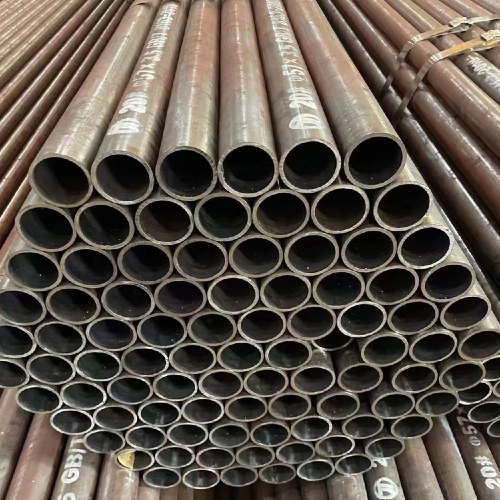
Key Properties of Pipe Steel in Construction Projects
Pipe steel is a preferred material for construction due to its key properties. Let’s explore some of these essential characteristics.
Strength and Durability
One of the primary reasons pipe steel is used in construction is its strength. Whether used in structural applications or as part of plumbing and pipeline systems, pipe steel is known for its ability to withstand heavy loads and pressures. It can handle both tensile and compressive forces, making it suitable for a wide range of construction needs.
Corrosion Resistance
Construction projects often involve exposure to the elements, chemicals, or high humidity. Pipe steel, especially when treated with coatings or made from corrosion-resistant materials such as stainless steel, is crucial for preventing material degradation over time. This durability helps reduce maintenance costs and prolong the life of the structure.
Flexibility and Fabrication
Pipe steel is also highly flexible and can be easily fabricated to fit specific project requirements. It can be cut, bent, and welded to meet the precise needs of a construction project. Whether it’s creating intricate piping systems or reinforcing structures, pipe steel can be molded to various sizes and shapes.
Applications of Pipe Steel in Construction Projects
Pipe steel is used in a variety of construction applications, from structural support to fluid transport. Below are some of the most common ways pipe steel is utilized in large-scale construction projects.
Structural Support
In construction, pipe steel is often used to create strong, stable structures. Steel columns, beams, and frames made from pipe steel provide the necessary support for buildings, bridges, and other infrastructure projects. Its ability to withstand heavy loads and stresses makes it an ideal material for building foundations and structural reinforcements.
Fluid and Gas Transport
One of the most common uses of pipe steel is for fluid and gas transport systems. In both residential and commercial construction, pipe steel is used in:
Water supply systems: For carrying potable water to buildings and homes.
Sewage systems: Transporting waste materials away from buildings.
Gas pipelines: Used to carry natural gas to homes and industrial sites.
Pipelines for Utilities
Pipe steel plays a crucial role in the construction of utility pipelines that carry essential resources, such as water, oil, and natural gas. These pipelines are often installed underground or within high-pressure systems, where pipe steel’s strength and resistance to corrosion are vital for long-term performance.
Reinforcement and Load-Bearing
In many construction projects, pipe steel is used as reinforcement within concrete structures. Reinforcing steel pipes are embedded within concrete to improve the structural integrity and load-bearing capacity of the final structure. This application is commonly used in highway construction, bridges, and foundations.
Advantages of Pipe Steel in Construction Projects
Pipe steel offers numerous advantages that make it an attractive choice for construction professionals. Below are some of the key benefits of using pipe steel in large-scale construction projects.
Cost-Effectiveness
Pipe steel is relatively cost-effective compared to other materials like concrete or wood. The manufacturing process, especially for welded pipe steel, is efficient and less expensive, making it ideal for large construction projects with tight budgets.
Availability and Sourcing
Pipe steel is widely available in various grades, sizes, and lengths, which allows for easy sourcing based on project needs. This availability ensures that construction projects can be completed on time, with minimal delays due to material shortages.
Sustainability
As a recyclable material, pipe steel is a sustainable choice for environmentally conscious construction projects. The ability to recycle pipe steel reduces waste and supports the circular economy by giving the material a second life in new projects.
Long-Term Durability
Pipe steel’s durability ensures that it can withstand wear and tear over time, making it a long-term solution for construction. Its resistance to corrosion and pressure ensures that it remains functional and reliable for many years, reducing the need for costly repairs.
Conclusion
In conclusion, pipe steel is an indispensable material in modern construction due to its strength, durability, cost-effectiveness, and versatility. It plays a crucial role in structural support, fluid transport, and utility systems, making it essential for large-scale projects. Its ability to be customized to meet specific project requirements further enhances its appeal as the preferred material for construction professionals.
At Tianjin Shengxiang Cold Drawn Steel Co., Ltd., we specialize in providing high-quality pipe steel products tailored to the needs of your construction projects. Our range of pipe steel is designed to meet various industrial standards, ensuring reliable performance and longevity. Whether you’re working on plumbing, structural reinforcement, or pipeline systems, we offer solutions that will enhance the durability and efficiency of your projects. Feel free to contact us for more information or to discuss how our pipe steel products can support your next construction endeavor.
FAQ
Q1: What is the difference between seamless and welded Pipe Steel?
Seamless Pipe Steel is manufactured without welding, offering better strength and resistance to pressure. Welded Pipe Steel is produced by welding steel sheets into a tube, making it more cost-effective for large applications, but less resistant to high pressure.
Q2: Why is corrosion resistance an important property for Pipe Steel in construction projects?
Corrosion-resistant Pipe Steel helps to maintain the integrity and lifespan of construction projects, especially in outdoor or underground applications where exposure to moisture and chemicals is common.
Q3: Can Pipe Steel be used for both above-ground and underground construction applications?
Yes, Pipe Steel is widely used for both above-ground and underground applications, including water pipelines, gas lines, and structural support systems. Proper corrosion protection ensures its effectiveness in underground settings.
Q4: How do I choose the right type of Pipe Steel for my construction project?
The right Pipe Steel depends on the specific requirements of your project, such as pressure tolerance, material strength, and environmental factors. Seamless pipes are ideal for high-pressure applications, while welded pipes are more cost-effective for general use.


