Heavy infrastructure and industrial manufacturing rely on a backbone of uncompromising strength. In these extreme environments, engineers must prioritize catastrophic failure prevention and load-bearing stability over simple lightweighting. You cannot risk structural integrity when human lives and vital operations remain at stake. A minor material failure easily cascades into a massive operational disaster.
While standard sheet metal serves consumer-grade needs perfectly well, heavy-duty applications demand Plate Steel. Industry standards strictly define this rugged material by its superior thickness and remarkable structural resilience under dynamic loads. We designed this comprehensive guide to provide procurement teams and engineers with a clear, actionable framework. You will discover how to map specific heavy-duty applications to exact material grades. We will detail crucial thickness specifications and highlight the massive value of precision fabrication. By the end, you will possess the specialized insights needed to source structural materials confidently.
Key Takeaways
Thickness Threshold: Plate steel is distinctly classified as metal exceeding 3/16” in thickness, designed for extreme stress and load-bearing rather than formability.
Broad Utility: Core applications span structural foundations, pressure vessels (A516), marine environments, and heavy transport.
Specification Reality: Material selection must align specific grades (e.g., A36, AR400) with weight calculations (e.g., 40 lbs/sq ft for 1” plate) to balance structural integrity with project budgets.
Fabrication Impact: Partnering with a high-end steel profiles manufacturer for CNC cutting and cut-from-coil processing reduces raw material waste and mitigates structural flaws.
1. Plate Steel vs. Sheet Steel: Defining the Heavy-Duty Standard
Many professionals use the terms "sheet" and "plate" interchangeably during casual conversations. This constitutes a critical engineering mistake. The industrial definition clearly separates the two categories based on a strict 3/16-inch (0.1875 inches) thickness threshold. Any flat metal product falling below this specific mark remains a sheet. Once the thickness reaches or exceeds 3/16 inches, the material officially becomes a plate.
Manufacturers optimize standard sheet metal for weight reduction and rapid surface formability. You see it constantly in appliance casings, HVAC ductwork, or automotive body panels. Conversely, metallurgists engineer heavy plates specifically for immense tensile strength. The thicker material excels at high-pressure containment and dynamic load resistance. You rely on it when building structures meant to hold thousands of tons safely.
Manufacturing origins also differ significantly between formats. Steel mills traditionally produce discrete plates using a massive reverse milling process. They roll individual heated slabs back and forth repeatedly to achieve the target thickness. This method produces incredibly thick, rugged slabs suitable for the heaviest applications.
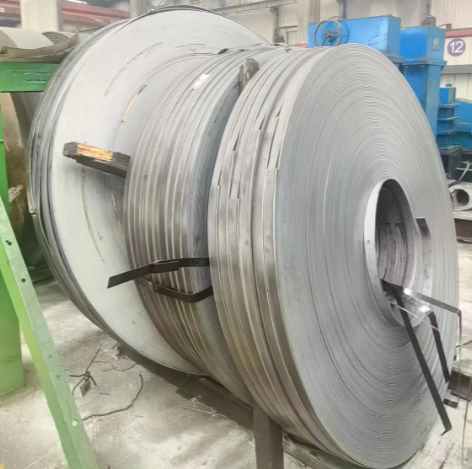
Today, modern facilities also utilize highly efficient cut-from-coil processes. They unroll massive continuous steel coils and cut them to custom lengths. The cut-from-coil method often improves overall surface flatness across the board. It also reduces surface oxidation and scale. This cleaner surface gives your fabrication team a superior canvas for immediate, high-quality welding.
2. Core Industrial Applications of Plate Steel
Heavy industry relies on specific material properties to function safely across diverse environments. Let us explore the primary sectors utilizing these robust materials daily.
Infrastructure and Civil Construction
Modern cities depend entirely on massive steel reinforcements. Construction teams heavily use thick plates in bridge decking, structural I-beam webs, and high-rise foundation baseplates. They form the unseen skeleton of urban development.
Implementation Reality: Engineers increasingly utilize an innovative method known as "steel plate construction." They arrange parallel metal plates and pump high-strength concrete into the gap between them. This modern technique drastically reduces standard rebar tying time on job sites. It maintains incredibly high tensile stress capacity while speeding up project timelines. You save valuable construction labor hours while ensuring maximum structural integrity.
Energy and Pressure Vessels
The global energy sector pushes construction materials to their absolute mechanical limits. We see widespread utilization in massive oil and gas pipelines, industrial power boilers, and chemical storage tanks.
Requirement: These hazardous environments demand highly specialized metal alloys. Extreme temperature fluctuations can easily crack standard carbon metals over time. Pressurized volatile contents require materials engineered specifically to prevent micro-fractures. Without these specialized grades, catastrophic blowouts and leaks become a severe operational risk.
Shipbuilding and Heavy Transportation
Marine engineering and heavy transport applications present unique environmental stressors. Manufacturers build massive ship hulls, offshore oil drilling rigs, and heavy locomotive frames using specialized plates.
Risk Mitigation: Marine environments demand superior weldability and excellent corrosion resistance. Saline water rapidly degrades inferior metals, compromising vessel safety. Furthermore, collision safety requires exceptionally high ductility. Ductile metals absorb sudden impact energy by deforming slightly rather than shattering. This vital characteristic prevents sudden brittle fractures during unexpected maritime collisions or rail impacts.
Specialty Applications (Armor and Anti-Slip)
Certain niche projects require highly specialized functional features beyond basic load bearing.
Military applications involve rigorous ballistics testing and tactical vehicle up-armoring. Armor-grade materials protect military personnel from explosive impacts and high-velocity projectiles.
In commercial logistics, facilities heavily utilize diamond plate, commonly called tread plate. The raised diamond surface patterns significantly improve foot traction. You will find these on industrial factory flooring, loading dock ramps, and commercial vehicle chassis. They drastically improve workplace safety metrics by preventing dangerous slips in wet or oily conditions.
3. Material Selection: Mapping Grades to Expected Outcomes
Choosing the correct metal grade determines the operational success of your entire project. We have mapped out the most critical specifications you must evaluate.
Grade-to-Application Framework
Different projects require different chemical compositions and yield strengths. Consider these widely accepted baseline standards:
ASTM A36: The trusted baseline structural standard. Engineers commonly specify this versatile grade for bridges, buildings, and general construction projects.
ASTM A572 / A656: High-strength low-alloy (HSLA) options. Choose these grades for applications requiring superior strength-to-weight ratios without adding unnecessary bulk.
ASTM A516 (Grade 70): Petrochemical and pressure vessel specific. It withstands extreme internal pressures and moderate-to-low temperatures flawlessly.
AR400 / AR500: Abrasion-resistant variants. These hardened plates dominate the mining sector, rock crushing, and heavy excavation equipment.
Review the comparison chart below to understand the primary use cases for each grade.
Steel Grade | Primary Characteristic | Ideal Industrial Application |
ASTM A36 | Reliable baseline yield strength, easy weldability | General construction frames, base plates, gussets |
ASTM A572 | High strength-to-weight ratio, columbium alloy | Large transmission towers, heavy bridge components |
ASTM A516 | Exceptional notch toughness, strong pressure retention | Power boilers, chemical storage tanks, gas cylinders |
AR400 / AR500 | Extreme surface hardness, severe wear resistance | Mining dump truck beds, excavator buckets, conveyors |
Thickness and Weight Realities
Engineering baselines rely entirely on precise thickness measurements. A 1/4-inch piece serves perfectly well for light structural supports or connection gussets. A 3/8-inch thickness handles medium bridge components and heavy machinery enclosures efficiently. For structural columns, high-rise foundations, and shipbuilding, you must upgrade to 1/2-inch or thicker.
You must also understand standard weight estimation logic. Calculating material weight accurately ensures safe logistics planning and lifting operations. A 1-inch thick, 12x12 inch standard steel base plate weighs approximately 40 lbs per square foot. You can scale this logic directly based on your needs. For instance, a 1/2-inch thick square foot weighs roughly 20 lbs. A massive 2-inch thick piece will weigh 80 lbs per square foot. Understanding these baselines prevents dangerous crane overloads during site installation.
4. Precision Fabrication: The Role of a High-End Steel Profiles Manufacturer
Securing raw material only solves half the industrial puzzle. You must accurately process these heavy slabs into highly specific, usable components.
Beyond Raw Distribution
B2B buyers should critically evaluate advanced fabrication capabilities alongside simple raw material availability. Sourcing from a basic distributor who cannot process the metal adds unnecessary logistical steps. You waste valuable time and freight money transferring materials between secondary vendors. Instead, partnering directly with a high-end steel profiles manufacrurer streamlines the entire supply chain.
Key Processing Capabilities
Modern fabricators offer several crucial deep-processing services. Consider these capabilities carefully when vetting potential supply partners:
Precision CNC Cutting: Advanced plasma, laser, and flame cutting technologies ensure exact dimensional tolerances. They slice through incredibly thick metal smoothly, minimizing the destructive heat-affected zone.
Heavy Forming and Bending: Edge beveling, plate rolling, and heavy-duty press braking shape the components prior to site delivery.
Streamlined Assembly: Professional pre-forming reduces the urgent need for extensive secondary on-site welding. You save thousands of labor hours and dramatically improve overall structural continuity.
Yield Optimization
Scrap rates rapidly ruin material budgets. Cut-from-coil processing fundamentally changes this wasteful dynamic. Advanced facilities unroll massive metal coils and slice them precisely at custom lengths. This strategic approach drastically reduces scrap rates across the board. It effectively eliminates dead stock for large-scale production runs. You only pay for the exact metal lengths required by your engineering CAD files.
Surface Treatment
Untreated metal rusts rapidly when exposed to the elements. Excellent suppliers always provide comprehensive pre-fabrication surface treatments. They utilize industrial shot blasting to strip away stubborn mill scale. They perform meticulous edge deburring to smooth out sharp, dangerous burrs. They also offer hot-dip galvanizing services for extreme moisture environments. These critical steps ensure the metal arrives at your job site immediately weld-ready. They also guarantee robust, long-term environmental protection.
5. Procurement Evaluation Criteria for Plate Steel
Sourcing heavy metals requires a strategic, rigorous evaluation matrix. You must meticulously verify component quality before committing substantial project budgets.
Supply Chain Traceability
Never buy unverified structural metal. You must demand certified Mill Test Reports (MTRs) from your chosen supplier. An MTR accurately verifies the exact chemical composition of the specific poured batch. It clearly confirms the mechanical properties match your requested ASTM standard. It details vital metrics like carbon equivalent and yield strength. You must review these critical documents thoroughly before authorizing any permanent installation.
Capacity and Scalability
Evaluate whether a potential supplier can easily handle your maximum volume. They must provide consistent dimensional accuracy across standard plate sizes. Standard dimensions typically range from 4x8 feet up to massive 8x20 feet sheets. Furthermore, verify their custom processing capabilities. A truly robust supplier can cleanly process custom widths up to 120 inches. Securing this scalability prevents disastrous bottlenecks during massive construction phases.
Lifecycle Costs
Project budgets often focus too heavily on initial upfront pricing. Smart procurement teams evaluate the entire material lifecycle. Premium high-strength grades, like HSLA, cost noticeably more initially. However, they provide immense long-term savings by reducing ongoing structural maintenance. For transportation sectors, stronger, lighter alloys drastically increase daily payload capacity. Additionally, steel boasts 100% material recyclability at its end-of-life stage. You easily recover scrap value while actively supporting sustainable global engineering practices.
Conclusion
You now clearly understand the critical elements of heavy-duty material selection. Plate steel remains the fundamental, non-negotiable backbone of modern heavy industry. It performs flawlessly provided you match the right grade and specific thickness to expected environmental stressors.
Successful procurement demands a highly balanced approach. You must carefully align exact material specifications, such as A36 or AR400, directly with your operational realities. Furthermore, you must deeply rely on a fabricator's advanced ability to minimize raw waste. They must also ensure strict tolerance compliance across every single cut.
We strongly encourage project engineers and procurement buyers to take immediate action today. Submit your detailed CAD files or project load requirements to a qualified, full-service manufacturer. Request a comprehensive technical review alongside a detailed material quote. This simple step keeps your massive projects moving forward safely and efficiently.
FAQ
Q: What is the minimum thickness for a metal to be considered plate steel?
A: The industrial standard strictly defines plate steel as any metal measuring 3/16-inch (0.1875 inches) or greater in thickness. Any material falling below this specific threshold is universally classified as sheet metal. Engineers rely on this strict baseline to ensure adequate load-bearing capacity.
Q: Can plate steel be effectively recycled without losing structural integrity?
A: Yes, it boasts 100% recyclability. Facilities melt down old scrap and re-roll it into new products. This remelting process does not degrade the base mechanical properties. Recycled steel maintains the exact same tensile strength and durability as newly mined material.
Q: What is the difference between discrete plate and plate cut from coil?
A: Discrete plates are rolled individually on a reverse mill, achieving high thicknesses and extreme widths. Plate cut from coil originates as a massive continuous rolled sheet. The coil process generally offers better surface quality, improved flatness, and allows for custom lengths to minimize scrap waste.
Q: How do you calculate the weight of a standard steel base plate?
A: Engineers use a standard baseline calculation. A 1-inch thick solid steel plate measuring exactly 12x12 inches weighs approximately 40 pounds per square foot (psf). You can easily scale this ratio up or down proportionally based on your specific thickness requirements.


